


Laser Varicose Vein Surgery (EVLA) – The Perfect Laser Solution for Gentle Treatment of Venous Disorders
For over two decades, we have been applying incision-free, intravascular (endovenous), minimally invasive surgical procedures. Based on international studies, it has been determined that the surgical burden is significantly lower, the occurrence of complications can be minimized, and the improvement in quality of life is markedly faster compared to traditional surgery. In certain countries with specialized insurance coverage, modern venous surgical methods are predominantly used!
Description of the Condition
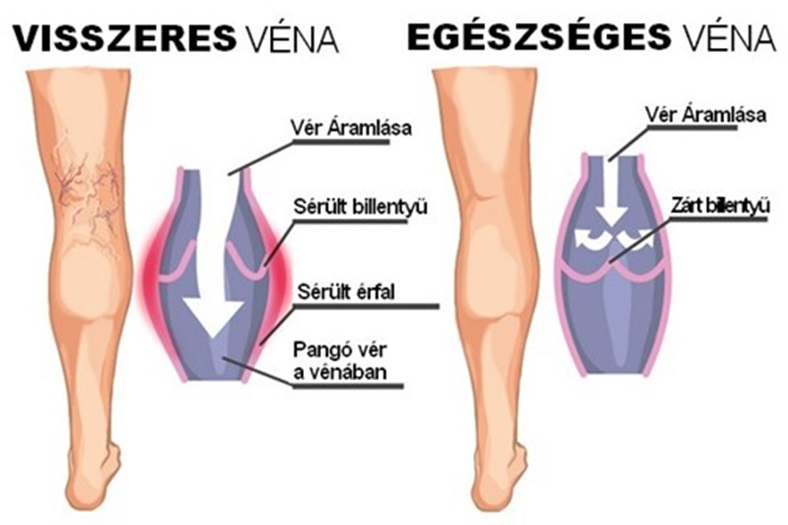
As a result of the dilation of the venous network in the lower limbs, venous circulation becomes so severely impaired that the functioning of the valves within the veins becomes irreversibly insufficient. Consequently, severe congestion develops, the venous flow reverses, and, figuratively speaking, everything aligns for a complete circulatory disorder. Thanks to modern medicine, you can get rid of your varicose vein symptoms with a truly simple and painless technology.
The Procedure
The procedure entirely replaces traditional surgeries typically used for dilated veins. For years, we have employed laser technology, achieving great success in the treatment of varicose veins. Laser varicose vein surgery is not restricted by age, as both young and elderly patients can suffer from varicose veins.
Manifestations of Venous Circulation Disorders:
- Periodic feelings of heavy legs, moderate swelling of the lower legs, and cramping pain at night.
- Spider veins (telangiectasias) on the skin, causing aesthetic concerns.
- Dilation of branches of the main venous networks, accompanied by:
- Edema.
- Induration, inflammation, eczema, pigmentation.
- Leg ulcers.
- Deep vein thrombosis-pulmonary embolism and post-thrombotic syndrome associated with varicose veins.
Benefits of Laser Varicose Vein Surgery:
- It means that within a few weeks, there will be no trace of the painful and uncomfortable condition that once affected you!
- The procedure provides optimal cosmetic results.
- Unlike traditional surgeries, there are no incisions.
- It involves negligible pain.
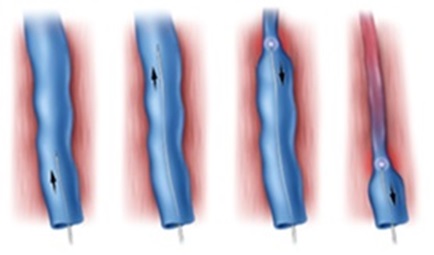
- A pencil-thin laser probe is guided into the affected veins by the vascular surgeon, and the veins are sealed using the laser. This redirects circulation towards the deep venous system, significantly improving circulation in the legs.
- Complication-free and rapid recovery.
- Long-term follow-up studies have shown that the recurrence rate of the laser procedure is significantly lower than that of traditional surgical methods.
Preparation
Prior to the surgery, laboratory tests, ECG, chest X-ray, and on-site anesthesiology consultations are conducted, along with instrumental diagnostic examinations. You will receive detailed information about the circumstances of the procedure, including if any test results do not support the surgery.
- Simultaneous treatment of both legs is possible in a single procedure.
Our main goal is to ensure that there is no trace of painful varicose veins or the surgery itself. By treating both legs at the same time, you can be free from varicose veins in the shortest possible time.
The Surgery
- Preoperative Instructions:
- On the day of surgery, you must not eat, drink, or chew gum.
- Bring any regularly taken medications, and you will receive prior instructions regarding their administration during the preoperative consultation with the anesthesiologist.
- Ensure your skin is dry, and do not apply cream to your legs.
- During the Surgery:
- You will receive an infusion during the procedure.
- While preparations are being made in the operating room, you will remain awake. The subsequent steps depend on the type of anesthesia/sedation used.
- Heart function and blood oxygen levels are monitored continuously during the operation.
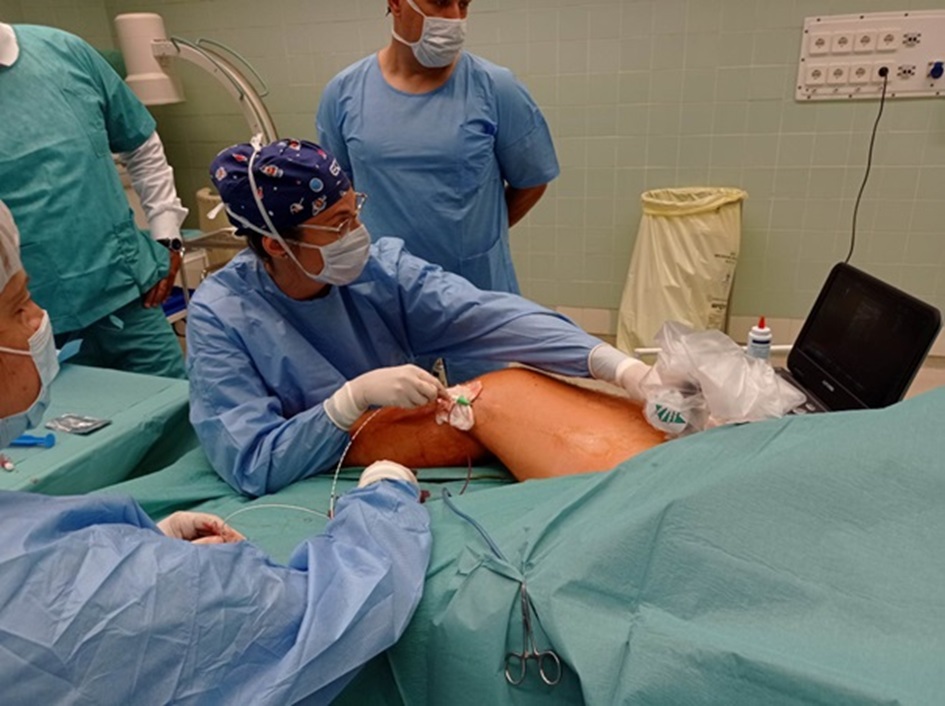
- A laser probe is inserted into the diseased vein through a needle puncture and seals the vein using laser energy.
- Ultrasound is used continuously to monitor the subcutaneous events.
- At the end of the surgery, a compression bandage is applied to the leg.
- Duration:
The procedure typically takes 30 minutes to an hour. The entire leg or bilateral treatment is performed as part of a one-day surgical care service. A short video about the procedure is available for further explanation.
Postoperative Care
Immediately after the surgery:
- It is essential to walk and move your legs.
- The dressing applied in the operating room will be checked by the doctor.
- The frequency of dressing changes will be determined by your doctor.
- Wearing compression bandages or stockings is mandatory for two weeks.
- A gentle lifestyle is recommended for 1-2 days after surgery; avoid excessive physical exertion.
Warning Signs:
If you experience fever, sudden leg swelling, throbbing pain, or discharge from the wound, you must contact your surgeon immediately.
Recovery Instructions:
The attending physician will advise when you can resume sports, how long you need to wear compression stockings, and when it is safe to bathe the surgical area. Gradual leg loading is allowed, but strenuous physical activity should be avoided for a few weeks. After surgery, you can return home accompanied and will receive a detailed discharge report. You must not drive or sign legal documents within 24 hours of the procedure.
Summary
The advanced EVLA (Endovenous Laser Ablation) method revolutionizes endovascular laser therapy, offering new opportunities for both patients and physicians, even in cases where previous varicose vein surgery scars might suggest that recurrence renders this method inadvisable.
- Minimal pain, often completely painless procedure.
- Quick recovery.
- Excellent medical and cosmetic results.
- “One-day” treatment method.
- High patient satisfaction.
Contraindications:
The procedure cannot be performed if preoperative laboratory tests reveal abnormal values, such as undiagnosed diabetes, anemia, or bleeding disorders. However, after these issues are identified and treated, the surgery may proceed.
In cases of previous deep vein thrombosis, the condition of the deep venous system determines the feasibility of surgery. For patients with a high risk of thrombosis, LMWH (low molecular weight heparin) prophylaxis is used.
Potential Complications:
- Immediately after the procedure, a natural feeling of tightness may occur, which subsides and disappears within a day or two.
- Very rarely, bleeding or inflammation may develop.
Expected Outcomes:
- The primary goal of the surgery is to eliminate hemodynamic (circulation-related) damage, thereby resolving typical symptoms.
- The secondary goal is to remove varicose veins causing aesthetic concerns.
- A third objective is to reduce stagnant pressure in spider vein areas, aiding more effective sclerotherapy for perfect cosmetic results.
- No stitches are used during the procedure; only a few small puncture marks remain on the skin. The bulging, bluish, twisting veins are eliminated.
This treatment belongs to the most modern methods, tailored to the needs of contemporary individuals. Varicose veins can be removed without major surgery, and the condition can be painlessly alleviated, achieving symptom-free status. Patients can enjoy minimal recovery time and virtually no risks, regaining beautiful and healthy legs.
Microwave-Based Venous Closure – Thermocoagulation
Electromagnetic waves with frequencies between 0.3 and 300 GHz have been known for their heating effects since the late 1950s in the United States. This principle forms the basis of microwave ovens commonly used in households. The application of microwaves in varicose vein surgeries was researched in the early 2000s, but the first microwave-based varicose vein procedure outside China, including in Hungary, only took place in December 2018. With the advent of endovenous techniques, venous surgery entered a new era globally and domestically.
Over the past decades, one of the most significant developments in venous surgery has been the “endovenous procedure,” which means that the treatment device is located inside the vein during the procedure. Previously, these veins were removed externally using tearing, cutting, and puncturing tools, causing additional injuries and damaging the tissues of the limbs.
In the treatment of varicose veins and the management of trunk insufficiency, endovenous procedures have become widespread over the last decade, to the extent that the most recent international guidelines now recommend Endovenous Thermal Ablation (EVTA) as the “gold standard” procedure.
The equipment used for these interventions has undergone significant advancements, resulting in new methods, the most recent of which is endovenous microwave ablation. Microwave operations are not entirely new in medicine, although in the field of venous surgery, they are still considered an exciting new development.
It is already certain that this technique is well-suited for treating large veins and side branches. When the treated vein wall closes due to the heat, the symptoms disappear, and patients can return home the same day as the procedure.
Compared to earlier heat-based techniques, this procedure emits significantly less heat, providing greater safety for surrounding tissues.
The essence of the procedure is that the cannula placed in the vein does not need to contact the vein wall. The microwave interacts with the water in the cells of the vein wall, and because microwave energy is perfectly controllable, the heat transfer is limited to what is strictly necessary.
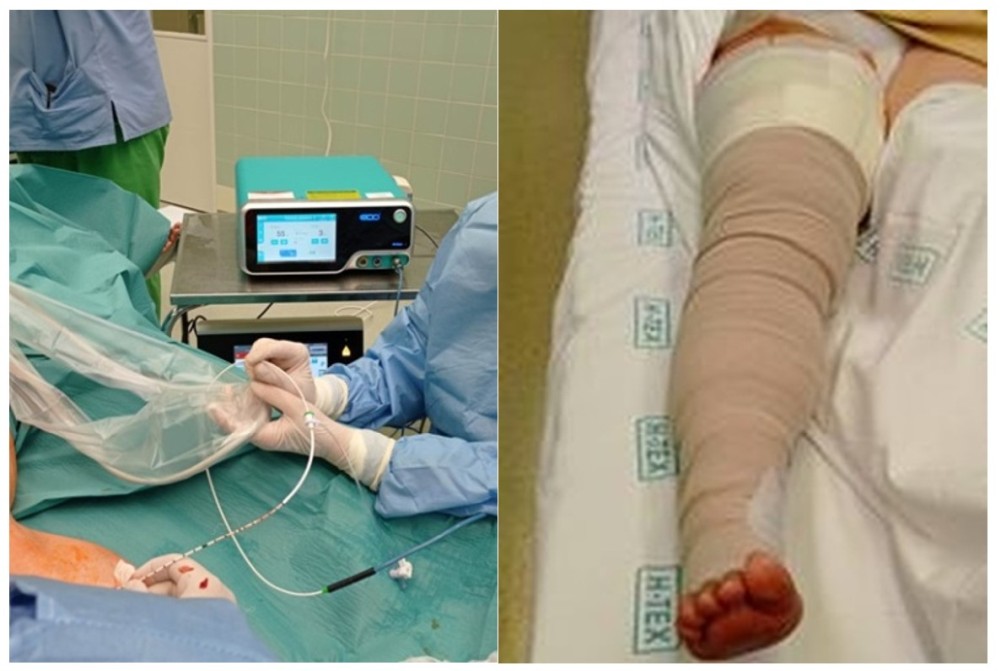
It does not emit “light,” so there is no need for laser goggles, laser-secure rooms, laser warning signs, or laser eye protection. The procedure is performed under local anesthesia or mask-assisted sedation, meaning patients can go home shortly after the treatment. Regardless of the type of anesthesia chosen by the patient, they leave the clinic within a few hours after the procedure, wearing compression bandages or stockings.
Today, a new chapter has begun in incision-free surgeries, during which the gentlest and currently likely the most effective method has been successfully developed and tested. Moreover, surgeries performed using this technique place a significantly smaller burden on patients compared to traditional surgeries.
Advantages Over Traditional Methods:
- Reduced Heat Emission: Compared to traditional thermal ablation, the microwave device operates at lower temperatures (75–85°C vs. 100–120°C for laser). This significantly decreases the risk of thermal complications. This temperature is sufficient for effective vein treatment, and according to experience, there is minimal to no pain after the procedure, along with much less skin and tissue damage.
- Controlled Application: The heat is precisely localized, delivering only the amount necessary to close the vein without affecting surrounding tissues.
- Enhanced Safety: The procedure minimizes the likelihood of burns or other thermal injuries to adjacent structures.
- No Visible Scars: No incisions are made, so patients avoid scars, stitches, and the associated risks of infection or bleeding.
- As a direct consequence, recovery is easier and faster. Since there are no surgical incisions or cuts, the risk of infections, complications, and bruising is minimal. While wearing compression stockings is recommended for a few weeks, patients can continue their daily activities without significant strain, excluding heavy physical labor.
Technical Innovations:
- Long and Short Antennas:
- A long antenna is inserted into the main venous trunk through a catheter to address dilated sections, verified by ultrasound before the procedure begins.
- A shorter antenna is used for treating side branches and perforator veins.
- Customizable Heat Delivery:
- The system allows for adjustments based on individual needs, such as faster, high-frequency heating or slower, low-temperature treatments, ensuring precise control.
Procedure Details:
- The exact vein and its dilated segments are identified and mapped using ultrasound.
- The device’s probe is carefully inserted into the vein under local anesthesia or light sedation.
- Microwave energy is applied to heat the vein, causing it to collapse and seal shut. The targeted vein is thus removed from circulation without significant disruption to surrounding tissues.
- Patients can leave the clinic the same day wearing compression stockings or bandages.
Postoperative Care:
- Rest is recommended for the first 3–4 days, with minimal strain on the legs. Avoid standing in one place or sitting with legs hanging for extended periods.
- Compression stockings are advised for 2–4 weeks, depending on the severity of the condition.
- Patients can resume daily activities soon after the procedure, excluding heavy physical labor.
Conclusion:
Microwave-based varicose vein treatment represents a new chapter in minimally invasive surgery. The technique is not only highly effective but also remarkably patient-friendly, requiring minimal recovery time. By utilizing lower temperatures and avoiding incisions, it reduces the burden on the body while ensuring excellent outcomes. This method aligns with modern expectations for efficiency and comfort in healthcare.
Varicose Vein Surgery Under Local Anesthesia
Varicose veins that develop in the legs are not only a cosmetic concern. Dilated veins struggle to transport “used” blood back to the heart efficiently, leaving the legs overburdened, fatigued, tense, heavy, and causing pain in the enlarged veins. Bandages and compression stockings provide only temporary relief. Over time, the condition worsens, potentially leading to painful leg ulcers or pulmonary embolism.
The best solution is to remove the dilated veins from the system as early as possible. Genetic predisposition plays a role in the development of varicose veins, but lifestyle, body weight, and overall health are also significant factors. Varicose vein surgery under local anesthesia is preceded by a thorough vascular surgical and ultrasound examination to ensure the doctor is familiar with the course and condition of the veins. A personalized treatment plan helps prevent potential complications in the future. It is essential for the patient to drink enough fluids before the procedure to prevent vein collapse. Regularly taken medications should be consumed as usual. The skin must be dry, and no creams should be applied the night before or the morning of the procedure.
The Surgery
The advantage of this procedure is that injecting the local anesthetic involves minimal stress and is significantly less expensive than the cost of short sedation. However, this advantage is also its limitation, as only short sections of abnormalities can be treated with this method.
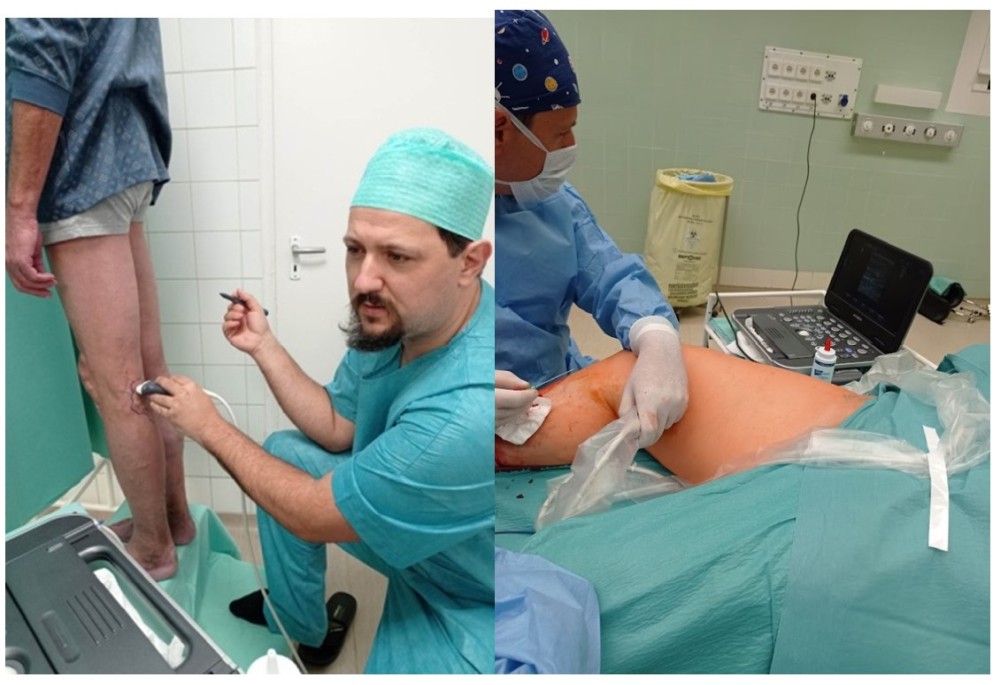
There is no recovery period or aftercare required. Patients do not need to remain in the clinic for 4 hours post-procedure; staying for approximately an hour is sufficient. During the intervention, the patient’s skin is disinfected and isolated at the appropriate site. Following local anesthesia with a thin needle, a catheter is guided into the vein, and heat-based sealing is performed as described. If necessary, dilated veins in the lower leg may be sclerotized. Patients may feel a sensation of warmth but should not experience sharp pain. Apart from a dull pulling or pressure, no other discomfort should be felt, and the procedure concludes with dressing the treated area.
After the Surgery
After the intervention, compression stockings or elastic bandages are applied. After a brief observation period, the patient may return home or to work and resume their daily activities. Modern surgical technology, compared to traditional surgery, takes only a few hours out of the patient’s life. There is no recovery period; patients can almost immediately stand up after the procedure performed in our Budapest clinic.
Laser-Microwave Hemorrhoid Surgery
Description of the Condition:
Hemorrhoids are swollen clusters of blood vessels located in the lower part of the rectum or around the anus. Primary symptoms include bleeding, pain, protrusion, and itching. Factors contributing to their development include heredity, pregnancy, childbirth, obesity, sedentary lifestyle, desk jobs, and unhealthy, heavy diets.
Forms of Hemorrhoids:
Hemorrhoids are classified into four stages based on severity:
- Stage I: No protrusion yet.
- Stage II: Protrusion occurs during bowel movements but retracts afterward.
- Stage III: Protrusion occurs during bowel movements but requires manual retraction.
- Stage IV: Permanent protrusion that cannot be retracted manually.
In the early Stage I, conservative measures such as dietary changes, medication, and topical treatments can alleviate symptoms.
When Is Surgery Necessary?
Surgical intervention is required in more advanced stages, such as Stage II with regular bleeding, Stages III-IV, or in the most severe cases of strangulated or thrombosed hemorrhoids. Treatment options include traditional or laser-microwave methods.
Prerequisites for Surgery:
- The patient’s complete mental and physical well-being.
- Laboratory test results not older than two weeks, showing no abnormalities.
- EKG (electrocardiogram).
It is essential to confirm that the patient has no allergies, especially to local anesthetics. Inform the medical team of any blood clotting disorders; however, anticoagulant medications generally do not need to be discontinued for the procedure. Surgery cannot proceed if preoperative tests reveal abnormal laboratory results, which must first be addressed. Once resolved, surgery is no longer contraindicated.
Pre-Surgical Preparations:
- The day before surgery, after a light lunch, only liquids (e.g., soup, juice, tea) may be consumed, and smoking is allowed only until midnight.
- FROM MIDNIGHT ONWARD, EATING, DRINKING, SMOKING, AND EVEN CHEWING GUM IS PROHIBITED! Deviation from this rule will result in cancellation of the procedure.
- Patients will receive specific instructions about taking regularly prescribed medications during their preoperative consultation with the operating physician.
- If necessary, the surgical area must be shaved.
- Following a verbal briefing, the patient will sign the surgical consent form.
Surgical Procedure:
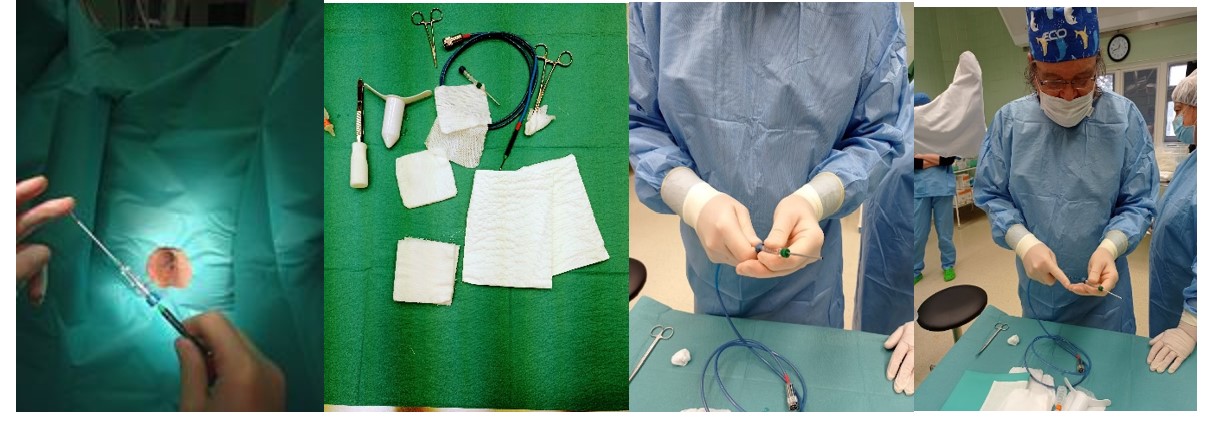
After positioning (lithotomy position) and disinfecting the area, the affected region is isolated. The next step involves identifying the hemorrhoid clusters. Using an anoscope, small and large lesions are easily accessed.
The procedure, based on thermocoagulation, offers significant advantages as it BURNS the hemorrhoidal tissues WITHOUT INCISIONS, leaving no wounds, scars, or anal narrowing. The microwave device operates at a lower temperature (85°C), reducing damage to surrounding tissues. Additionally, this procedure does not require specialized surgical equipment or facilities.
The procedure takes approximately 15 minutes. Patients can go home a few hours later, with recovery time significantly shorter than traditional surgeries.
Postoperative Care, Medications, Lifestyle, and Follow-Up:
Immediately After Surgery:
- Patients may drink liquids one hour post-surgery and leave the facility after four hours if they feel well. At that point, light meals are allowed.
- A gauze tampon is applied during surgery and should ideally be removed during the first bowel movement the day after the procedure.
Dietary Recommendations:
- Avoid constipation and diarrhea by consuming dietary fiber (e.g., bran) during meals and ensuring adequate hydration.
Pain Management:
- Use previously effective painkillers such as Cataflam, Advil, Panadol, or Algopyrin if needed.
Medications:
- Prescribed suppositories should be used twice daily (morning and evening) after cleansing the surgical site, typically for about one week until pain subsides.
- Detralex (a venotonic medication) should be taken starting the day after surgery in the following dosages:
- 6 tablets daily for the first 4 days.
- 4 tablets daily from day 5 to day 7.
Wound Care:
- Disinfect the surgical site daily for at least a week to address swelling and local inflammation.
Activity Restrictions:
- A gentle lifestyle is recommended post-surgery, avoiding heavy physical exertion or lifting heavy objects.
- Patients can maintain independence, perform daily tasks, and continue intellectual work.
Follow-Up Visits:
- The operating physician determines the need for additional medications and sets follow-up appointment dates.
- Patients must adhere to medical instructions and attend mandatory follow-up appointments (typically 2 weeks post-surgery, then after 6 months, and annually thereafter).
Failure to comply may lead to health deterioration, for which the patient is responsible.
Expected Postoperative Effects:
- A natural tightness or discomfort immediately after surgery is normal, and pain relief is initiated promptly.
- Swelling at the surgical site is part of the healing process.
- Mild bleeding after bowel movements may occur during the first 1–2 weeks.
Symptoms Requiring Immediate Medical Attention:
- Fever after surgery.
- Significant bleeding.
In such cases, contact the operating physician immediately.