


Please contact the podiatrist for all orders: +36 30 147 5020
Podiatric Care
Lilla Kovács
Podiatrist
I am Lilla Kovács, and I have been working in healthcare for 31 years. In 1992, I started my career in a general surgery department, where I worked as a nurse. In 1995, I continued my career in the operating room as an anesthesiology assistant, a role I have been performing with great dedication, albeit with brief interruptions, to this day. Over the past 29 years, I have earned qualifications as a certified nurse, hospice nurse, and Basic Life Support (BLS) instructor. This year, I achieved another degree with distinction, also from Semmelweis University, where I completed podiatry training.
I consider this field of expertise extremely important because, in Hungary, proper podiatric care could prevent the looming threat of amputations for a significant portion of diabetes patients. Addressing this issue requires nursing professionals with independent competencies. The training of podiatrists with a multidisciplinary approach is still in its infancy, even though they are capable of effectively managing diabetic foot conditions. I have always been interested in and actively involved in wound care, and now, as a trained podiatrist, I can also help individuals living with chronic wounds and foot deformities. This exceptionally rare university degree allows me to make good use of my expertise in the clinic, especially since few people know that podiatrists have been recognized as integral members of diabetes care and community nursing teams across the European Union for decades. Their work has rightfully earned the respect of both society and the profession.
This new training program has received significant support from the medical profession, with numerous esteemed professors and professional medical societies backing the launch of this specialized training. I feel I can contribute greatly to preserving, diagnosing, and treating the health of the patients who visit the clinic.
I welcome anyone who wants to improve the health of their feet, including those living with diabetes, vascular narrowing, or venous insufficiency.

Services Offered
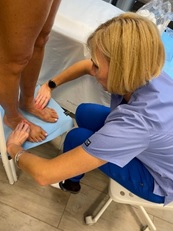
- Medical history taking, physical examination
- Assessment of arterial circulation
- Evaluation of venous health
- Neurological (nerve damage) screening with instruments
- Orthopedic foot examination
- Wound care
- Removal of potentially dangerous corns and calluses in diabetic patients
- Provision of assistive devices
Details of Services
Medical History and Physical Examination:
The primary data obtained from the body greatly aids in diagnosing existing issues. After discussing the patient’s medical history, I perform the following examinations:
- Inspection of limbs
- Measurement of blood pressure and pulse
- Palpation of major neck arteries, as well as upper and lower limb arteries
- Blood glucose measurement
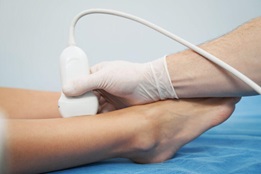
Arterial Circulation Examination with Doppler:
A Doppler examination provides information on the condition, width, and quality of the blood vessels, making it easy to detect vascular narrowing.
Venous Health Evaluation:
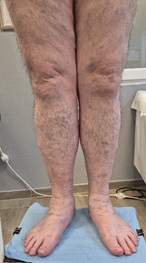
Venous insufficiency can lead to slow-healing wounds and limb edema. Mapping the issue helps in its prevention.
Neurological (Nerve Damage) Screening with Instruments:
Diabetic neuropathy (nerve damage) combined with lower limb arterial disease leads to the development of a “diabetic foot.” Neuropathy can be caused by:
- Narrowing of small and large blood vessels
- Increased pressure on certain areas of the foot
- Bone and joint deformities
- Orthopedic issues
- Injuries
- Local infections
- Skin and nail conditions
Diagnostic Tools Include:
- Riedel-Seifert Calibrated Tuning Fork Test: Examines vibration sensation using a 128 Hz vibrating instrument applied to various points on the foot to assess potential nerve damage.
- Semmes-Weinstein Monofilament Test: Tests protective sensation using a special 10g nylon filament applied to various points on the foot for 1.5 seconds to check tactile response.
- Tip-Therm Test: Examines the skin’s ability to perceive hot and cold sensations using a tool with cold metal and warm plastic surfaces applied to specific areas of the sole.
Orthopedic and Dermatological Foot Examination:
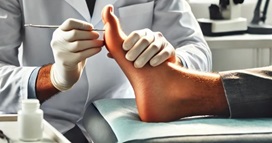
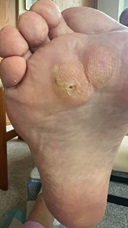
Assessment and diagnosis of deformities (e.g., hammer toe, bunions, collapsed arches, high arches), calluses, injuries, ulcers, interdigital fungal infections, toenail fungus, and ingrown nails.
Wound Care:
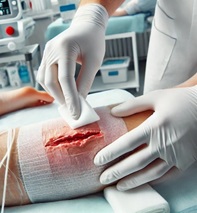
While minor abrasions, wounds, and surgical scars typically heal within 1-2 weeks, certain illnesses or health conditions can delay this process. In such cases, specialized dressings and techniques are necessary. I develop a treatment plan to guide the healing process, with medical support available if needed.
Removal of Potentially Dangerous Corns and Calluses in Diabetic Patients:
I do not perform aesthetic pedicures, but rather foot care aimed at preventing pressure ulcers for patients living with diabetes. For aesthetic foot care, or for issues such as insufficiently removed corns, calluses, and other problems, please seek the assistance of foot care professionals.
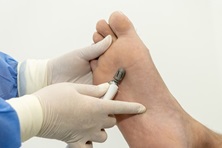
For patients with diabetes or neuropathy, I remove corns, calluses, and thickened skin around wounds that may be present on the sole or toes and pose a health risk.
This appointment, scheduled in advance, is always preceded by an examination—appointments for foot care alone cannot be booked!
Provision of Assistive Devices:
Depending on the diagnosed orthopedic conditions, chronic wounds, lymphedema, or skin health improvements, specialized tools may be required. These are made available after the examination.